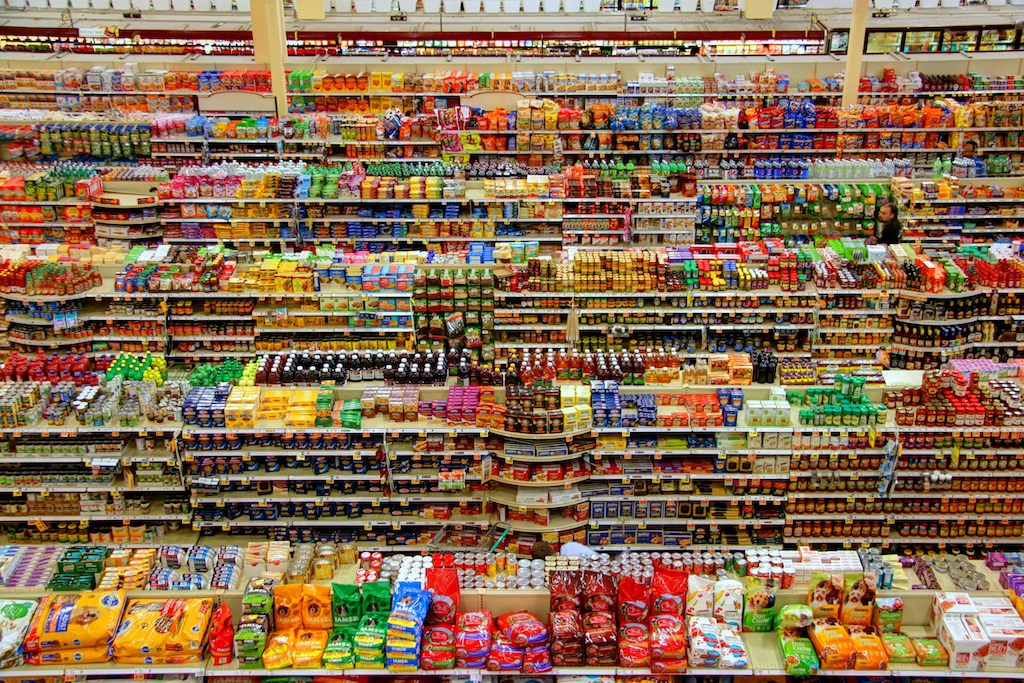
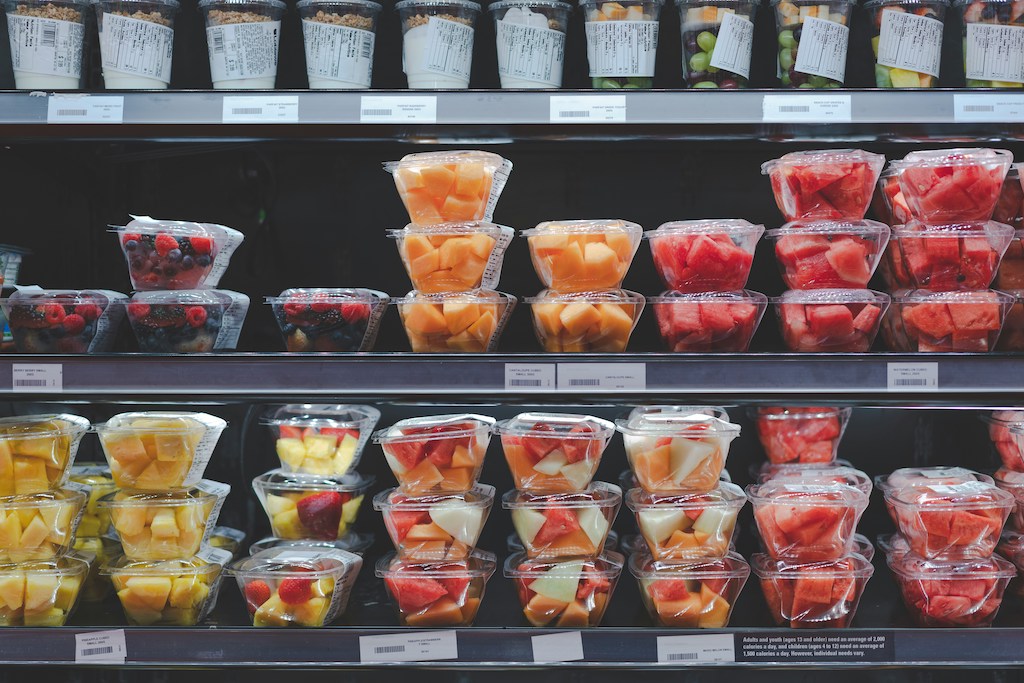
From takeout containers and plastic-wrapped produce to dairy products and bottled water, plastic food and drink packaging is flooding the U.S. We are eating plastic. Grocery aisles that were once stocked with many foods in paper or glass, or unwrapped entirely, are now lined with endless rows of unnecessary single-use plastic packaging.
The plastics industry intentionally promoted this system of disposability. In 1956, the editor of Modern Packaging stated “the future of plastics is in the trash can.” In 1963 he doubled down: “You are filling the trash cans, the rubbish dumps and the incinerators with literally billions of plastics…The happy day has arrived when nobody any longer considers the plastics package too good to throw away.”
All plastic is harmful, but throwaway plastic food packaging comes at a particularly steep cost to our health: like all plastic items, it sheds microplastics and leaches toxic chemicals—but directly into our food and drinks, making it one of the most common and often unavoidable sources of human exposure to these harmful substances. Growing evidence links exposures to microplastics and plastic chemicals to serious health risks, including cancer, heart attack, hormone disruption in children, infertility and reproductive problems in men and women, stroke, and even premature death.
The good news is that effective policy solutions have already been devised. Congress can act now to repair our broken food packaging system and reduce people’s exposure to microplastics and toxic chemicals through commonsense legislation that protects public health.
Less Plastic, Safer Foods
Plastic Pollution Coalition recently published an informative policy brief, Less Plastic, Safer Foods: Federal Opportunities to Reduce Microplastics and Toxic Chemical Exposure, which outlines current opportunities for federal action and summarizes the growing body of scientific evidence linking plastic food packaging to serious health risks warranting precautionary action.
Tackling Toxic Chemicals
The Ensuring Safe and Toxic-Free Foods Act in the U.S. Senate and the Grocery Reform and Safety Act in the U.S. House of Representatives would close a nearly 70-year-old loophole that has allowed thousands of chemicals to enter the food system without meaningful Food and Drug Administration (FDA) oversight. While Congress had intended for new food chemicals to undergo safety review under the Federal Food, Drug, and Cosmetic Act, the 1958 Food Additives Amendment created an exemption for substances that are “generally recognized as safe” (GRAS), originally for common ingredients such as baking soda and spices. Over time, that exemption became a major regulatory loophole through which numerous untested food and food-contact chemicals have entered the marketplace without public transparency. As a result, companies are not required to notify FDA of many chemical safety determinations, leaving regulators and consumers largely in the dark about chemicals added to food and food packaging.
Synthetic chemicals are used to give plastic packaging its desirable qualities—including flexibility, durability, lightness, and transparency. Scientists have identified approximately 14,000 food-contact chemicals, with roughly 3,600 already detected in the human body. While public concern has increasingly focused on food dyes and additives, packaging itself is a major source of exposure. For example, two phthalates commonly used in plastic food packaging have been linked to two million preterm births and 74,000 infant deaths worldwide in a single year.
These bills would put safety first by strengthening oversight of food-contact chemicals, increasing scrutiny of substances linked to cancer and reproductive or developmental harm, and requiring the FDA to periodically reassess chemicals already on the market.
Public support for reform is strong. Polling found that 83% of respondents do not trust companies to ensure chemical safety without government oversight, while 83% want greater transparency so they can make informed decisions. Concern about food packaging chemicals is also widespread, with 68% reporting they are somewhat or very concerned about chemical exposure from food packaging.
As a growing national issue, other bills have been proposed to reform GRAS, however some could weaken existing public health protections. For example, the FRESH and Affordable Foods Act would preempt state laws on food and packaging chemicals—effectively overturning PFAS bans on food packaging already enacted in 12 states. It would also grandfather in existing chemicals on the market, meaning toxic chemicals would get to stay in our food packaging for good. If passed, this bill would deepen existing gaps in our food safety system and make it harder to protect the public from harmful chemicals.
Reducing Microplastic Exposure
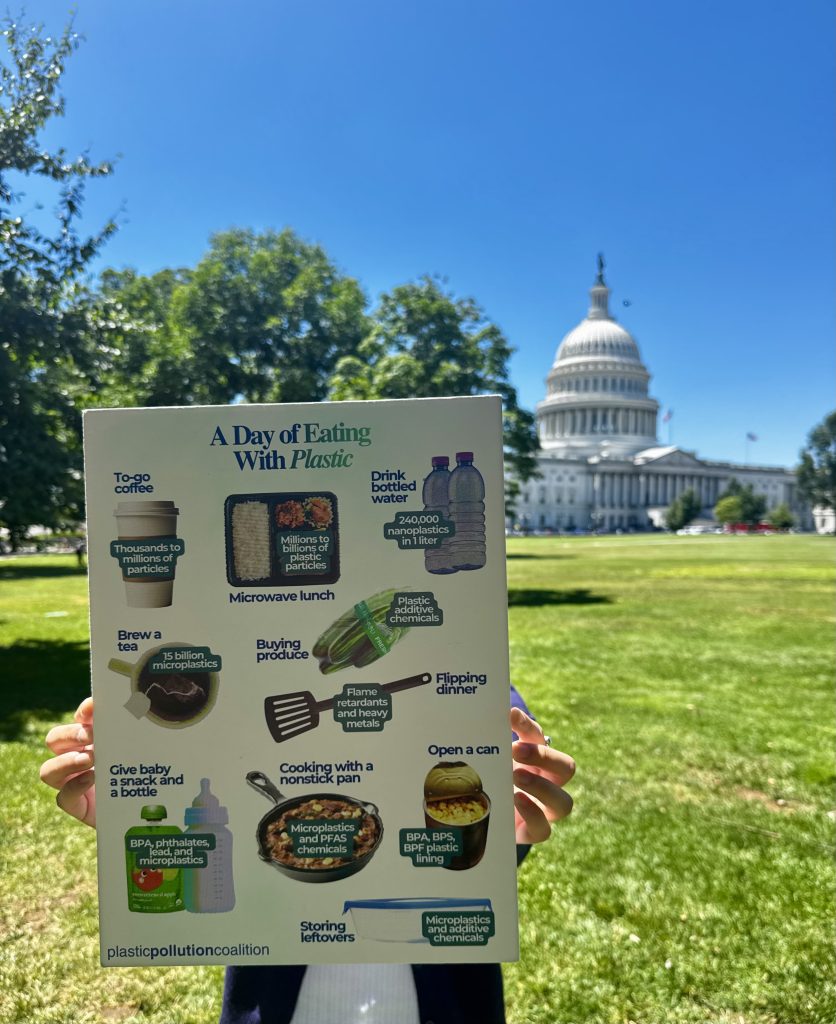
The Microplastics Safety Act would direct the FDA to study the human health impacts of microplastics in food and water and submit findings to Congress within one year. The legislation would assess major exposure pathways and links to cancer, chronic disease, and harms to children’s and reproductive health, while recommending legislative and administrative actions to reduce exposure.
Scientists, health experts, chefs, and the public are increasingly sounding the alarm on microplastics. One poll found that 89% of Americans are concerned about microplastics in food and drinks, while 79% agree that plastic particles pose a threat to human health and warrant action now.
Federal agencies, in response to growing public health concerns, announced plans to further study their impacts on human health. The Microplastics Safety Act would build on this momentum by ensuring sustained federal attention, accountability, and a legislative pathway toward actually reducing exposure through food and water. However, this crisis demands more than research—sufficient scientific evidence exists to show plastics’ harms—and must be paired with immediate policy action to protect health.
Plastic Packaging Fuels Pollution

As if plastic harming human health directly were not bad enough, it’s also wrecking our environment which we depend on to survive. The U.S. Environmental Protection Agency estimates that 14.5 million tons of plastic containers and packaging were produced in 2018, with 69% of that plastic sent directly to landfills. Approximately 95% of plastic food packaging is discarded after a single use.
Without action to curb plastic production, the plastic food packaging market is projected to grow by more than 58% between 2025 and 2035. Without federal action, Americans’ cumulative exposure to harmful chemicals and microplastics will continue to rise. While individual choices can help reduce exposure for ourselves and our loved ones as well as helping shift markets, plastic-free options are often inaccessible or unaffordable for many communities. Keeping toxic chemicals out of the food supply should not be the responsibility of consumers alone.
Take Action
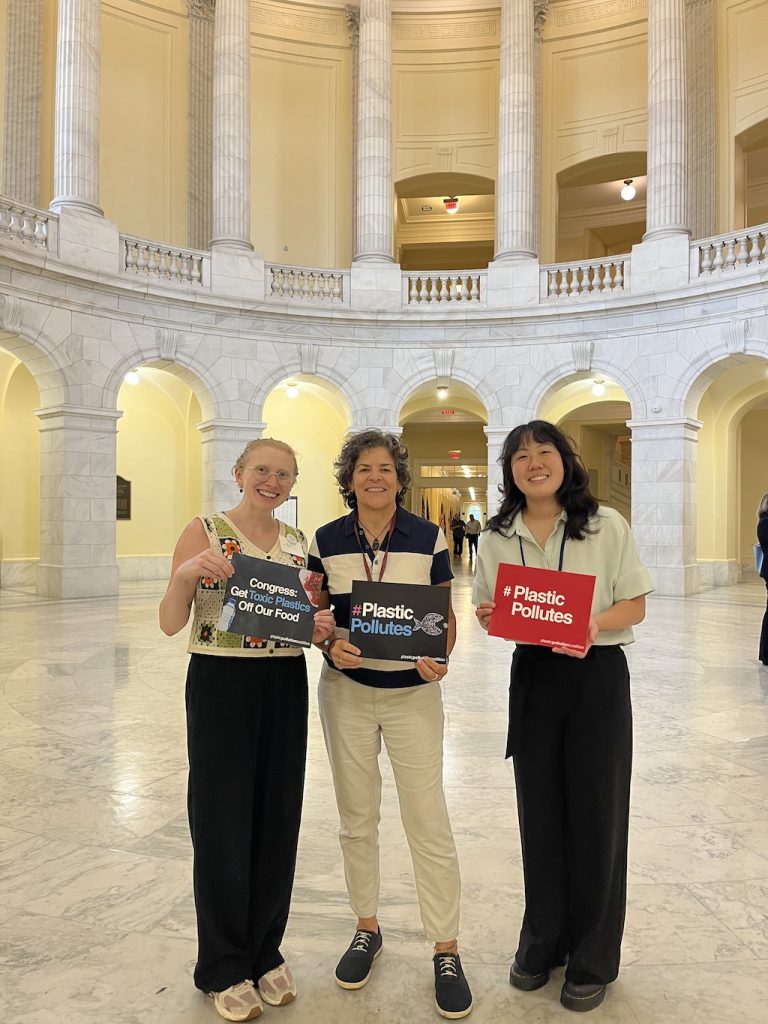
This week, PPC joined the Break Free From Plastic Movement’s lobby week to bring these policy solutions directly to Congress. We met with congressional offices to urge their support in strengthening food safety protections, reducing exposure to harmful chemicals and microplastics, and beginning to repair a regulatory system that has failed to keep pace with science. But we need your help!
Tell your legislators to support policies that get toxic plastics off our food and drinks.


