
Groups call for less plastic in baby food, formula packaging
There was more than epic music, food, and art to celebrate at Outside Lands Music and Arts Festival, August 7-9, in San Francisco’s Golden Gate Park. The beloved annual festival—featuring top-tier artists like Charli XCX, The Strokes, Rüfüs Du Sol, and Death Cab for Cutie—increased its greening efforts across the board, aiming to execute the most comprehensive waste diversion program in its 18-year history.

Ever since the groundbreaking Woodstock Music and Art Fair of 1969 left mountains of trash in its wake, sustainability has been a huge challenge for mega festivals. But at Outside Lands (OSL), which attracted 225,000 fans over three sold-out days, sustainability has always been on the main stage.
Outside Lands diverted 89% of its waste from landfills in 2025, the highest rate of any large-scale festival in the United States. That translates to roughly 330,000 pounds of material kept out of landfills that year alone. While this year’s numbers have yet to be tallied, it’s expected to meet or exceed its past record.
The key to this level of sustainability success is planned long before the first act takes the stage. Outside Lands works closely with local officials and experts in waste reduction. It maintains strict guidelines for sustainable materials sourcing, and executes a comprehensive program featuring free water refill stations, reusable drinkware options, composting, waste sorting, and other pioneering greening initiatives.
Cutting waste has always been a core part of our operations, and offering reusables as an alternative to single-use plastics is a major priority for us. We strive to source the most responsible materials for food and beverage service. It’s inspiring to see our team sort it into more than twelve different waste streams to be reused or repurposed, rather than just going to landfill.
— Annie Farman, Plastic Pollution Coalition Board Member and Director of Sustainability for Outside Lands
The festival sold colorfully-decorated commemorative reusable steel beer, cocktail, and wine cups to be used on site and taken home, priced affordably at $6-$8. Refillable steel water bottles were available at self-serve filtered water stations throughout the festival grounds, and guests were encouraged to bring their own reusable drinkware to help reduce waste.
Outside Lands is proof that we can put on large-scale events without the inevitability of creating mountains of waste sent to landfills. Annie Farman and the OSL team have done an excellent job of providing zero waste options and building a culture of reuse and refill, which creates a better experience for festivalgoers and better outcomes for our planet. OSL has something good going here.
— Aidan Maguire, Business Partnerships Manager, Plastic Pollution Coalition

This year marked the 10th consecutive year that Outside Lands has offered free filtered water refill stations throughout the festival grounds. Combined with offering and encouraging reusable drinkware, Farman notes that these hydration stations have been a key component for cutting festivalgoers’ use of single-use plastic beverage bottles.
We’re proud to have served the equivalent of 2 million bottles worth of free water refills to fans over the years.
— Annie Farman
Plastic Pollution Coalition Business Member Steelys Drinkware produced more than 14,500 reusable steel Outside Lands cups and bottles—and more than 125,000 compostable paper cocktail cups—for the event this year. Steelys has been a reusable drinkware supplier for Outside Lands for 12 years, having produced more than 100,000 custom steel cups and bottles since 2014.
One of my dreams for music festivals and outdoor events is to go to one that is actually zero waste, and Outside Lands (OSL) is in the process of moving us towards that goal by phasing out single-use plastic bottles and cups. It can be done. OSL is doing it.
— Dianna Cohen, Co-Founder and Chief Vision Officer, Plastic Pollution Coalition

Outside Lands has been leading the path towards plastic-free events for years. If an event of this scale can divert so much trash from landfills, then it shows that any festival can rethink wasteful systems and get there, too. The impact is exponential. For music fans, Outside Lands educates and inspires folks to rock their reusables and cut waste at home and in their daily lives.
— John Borg, Founder and CEO of Steelys
Waiākea Hawaiian Volcanic Water is promoted to Washington, D.C. consumers as “ethical,” “healthy,” and “sustainable”—despite the product line’s significant and ongoing contributions to plastic pollution
Washington, D.C. — Recycle Hawai‘i and Plastic Pollution Coalition, a project of Earth Island Institute, filed a complaint in the District of Columbia Superior Court on July 2, 2026, against Waiākea Hawaiian Volcanic Water for alleged “false and deceptive marketing” in violation of the District of Columbia’s Consumer Protection Procedures Act (CPPA). Waiākea Hawaiian Volcanic Water promotes its products as “ethical,” “healthy,” and “sustainable” despite its reliance on single use plastics and involvement in developing a plastic recycling facility expected to harm the local environment.
While Waiākea Hawaiian Volcanic Water advertises its products as “ethical,” healthy,” and “sustainable,” research shows that recycled plastic often contains more chemical additives than virgin plastic, which can leach into bottled beverages. Substances like heavy metals found in plastic are known to accumulate throughout the human body, and have been linked to serious health problems.
These findings run contrary to Waiākea Hawaiian Volcanic Water’s advertising claims, including the following, which appear on its consumer-facing social media, website, and packaging:
Example 1 of 3:

Example 2 of 3:

Example 3 of 3:

Waiākea Hawaiian Volcanic Water’s brand image is centered around health and environmental sustainability, despite the company’s significant contribution to plastic pollution. Waiākea Hawaiian Volcanic Water, which sells water in plastic bottles, markets itself as a superior alternative to other packaged water companies because it is “one of the only bottled waters to use high-grade 100% rPET.” On its packaging and website, it emphasizes the sustainability of recycling its products’ packaging—despite the fact that most plastic is never recycled, and that recycling does not address the key cause of plastic pollution: plastic production.
As alleged in Recycle Hawai‘i and Plastic Pollution Coalition’s complaint, Waiākea Hawaiian Volcanic Water perpetuates misleading industry narratives around using recycled plastic in its packaging, claiming on its website that rPET has “strong environmental credentials,” is “incredibly sustainable,” and that rPET products “give[] us the opportunity to take better care of the environment […]” Other messaging on Waiākea Hawaiian Volcanic Water’s website contains the claim that its plastic bottles are “completely recyclable,” and advertises its bottles as “eco-friendly,” touting their “low carbon footprint”—despite the fact that plastic, made from fossil fuels and a growing source of greenhouse gas emissions, is not a low-carbon material. As the Complaint alleges, very little plastic is ever recycled, and instead, the majority of plastic bottles that are collected for recycling are sent to landfills or incinerators, or are shipped overseas, perpetuating plastic production and its resultant plastic pollution, and environmental injustices.
As an organization dedicated to raising awareness about the dangers of plastic pollution, Recycle Hawai‘i is compelled to take action when unethical representations undermine our collective ability to make good choices about the products we consume. And until regulatory agencies step up to protect the public from the serious impacts of plastic pollution, personal choices are the only real defense we have against it. Corporations that intentionally thwart our capacity to make good choices for ourselves and our families need to be exposed and held accountable.
— Kristine Kubat, Executive Director of Recycle Hawai‘i
Plastic bottles are plastic pollution—and plastic pollution is not ethical, healthy, nor a sustainable solution. Perpetuating the myth that “recycled plastic” and “plastic recycling” are environmentally friendly, is marketing that deliberately deceives consumers and undermines real solutions to end plastic pollution. Companies that advertise plastic bottled water as “healthy” are ignoring the numerous streams of harmful pollution which plastic creates—from plastic sourcing from oil and gas, to plastic bottle production, all the way through its use and disposal—plastic negatively impacts our bodies, water, air, soil, and environment.
— Julia Cohen, MPH, Co-founder and Executive Director of Plastic Pollution Coalition
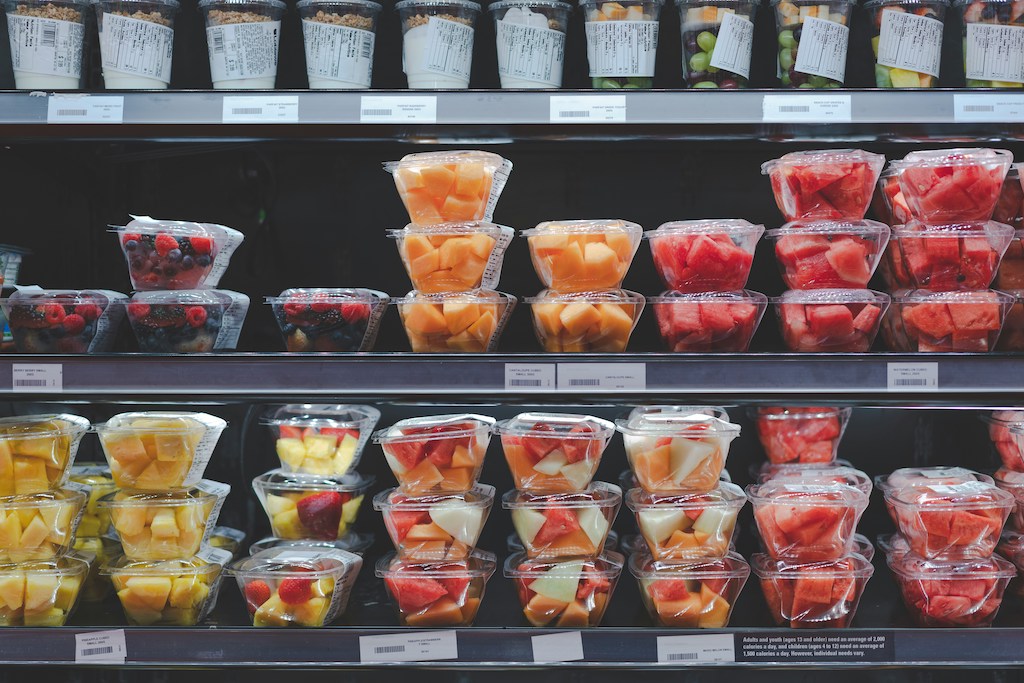
From takeout containers and plastic-wrapped produce to dairy products and bottled water, plastic food and drink packaging is flooding the U.S. We are eating plastic. Grocery aisles that were once stocked with many foods in paper or glass, or unwrapped entirely, are now lined with endless rows of unnecessary single-use plastic packaging.
The plastics industry intentionally promoted this system of disposability. In 1956, the editor of Modern Packaging stated “the future of plastics is in the trash can.” In 1963 he doubled down: “You are filling the trash cans, the rubbish dumps and the incinerators with literally billions of plastics…The happy day has arrived when nobody any longer considers the plastics package too good to throw away.”
All plastic is harmful, but throwaway plastic food packaging comes at a particularly steep cost to our health: like all plastic items, it sheds microplastics and leaches toxic chemicals—but directly into our food and drinks, making it one of the most common and often unavoidable sources of human exposure to these harmful substances. Growing evidence links exposures to microplastics and plastic chemicals to serious health risks, including cancer, heart attack, hormone disruption in children, infertility and reproductive problems in men and women, stroke, and even premature death.
The good news is that effective policy solutions have already been devised. Congress can act now to repair our broken food packaging system and reduce people’s exposure to microplastics and toxic chemicals through commonsense legislation that protects public health.
Less Plastic, Safer Foods
Plastic Pollution Coalition recently published an informative policy brief, Less Plastic, Safer Foods: Federal Opportunities to Reduce Microplastics and Toxic Chemical Exposure, which outlines current opportunities for federal action and summarizes the growing body of scientific evidence linking plastic food packaging to serious health risks warranting precautionary action.
Tackling Toxic Chemicals
The Ensuring Safe and Toxic-Free Foods Act in the U.S. Senate and the Grocery Reform and Safety Act in the U.S. House of Representatives would close a nearly 70-year-old loophole that has allowed thousands of chemicals to enter the food system without meaningful Food and Drug Administration (FDA) oversight. While Congress had intended for new food chemicals to undergo safety review under the Federal Food, Drug, and Cosmetic Act, the 1958 Food Additives Amendment created an exemption for substances that are “generally recognized as safe” (GRAS), originally for common ingredients such as baking soda and spices. Over time, that exemption became a major regulatory loophole through which numerous untested food and food-contact chemicals have entered the marketplace without public transparency. As a result, companies are not required to notify FDA of many chemical safety determinations, leaving regulators and consumers largely in the dark about chemicals added to food and food packaging.
Synthetic chemicals are used to give plastic packaging its desirable qualities—including flexibility, durability, lightness, and transparency. Scientists have identified approximately 14,000 food-contact chemicals, with roughly 3,600 already detected in the human body. While public concern has increasingly focused on food dyes and additives, packaging itself is a major source of exposure. For example, two phthalates commonly used in plastic food packaging have been linked to two million preterm births and 74,000 infant deaths worldwide in a single year.
These bills would put safety first by strengthening oversight of food-contact chemicals, increasing scrutiny of substances linked to cancer and reproductive or developmental harm, and requiring the FDA to periodically reassess chemicals already on the market.
Public support for reform is strong. Polling found that 83% of respondents do not trust companies to ensure chemical safety without government oversight, while 83% want greater transparency so they can make informed decisions. Concern about food packaging chemicals is also widespread, with 68% reporting they are somewhat or very concerned about chemical exposure from food packaging.
As a growing national issue, other bills have been proposed to reform GRAS, however some could weaken existing public health protections. For example, the FRESH and Affordable Foods Act would preempt state laws on food and packaging chemicals—effectively overturning PFAS bans on food packaging already enacted in 12 states. It would also grandfather in existing chemicals on the market, meaning toxic chemicals would get to stay in our food packaging for good. If passed, this bill would deepen existing gaps in our food safety system and make it harder to protect the public from harmful chemicals.
Reducing Microplastic Exposure
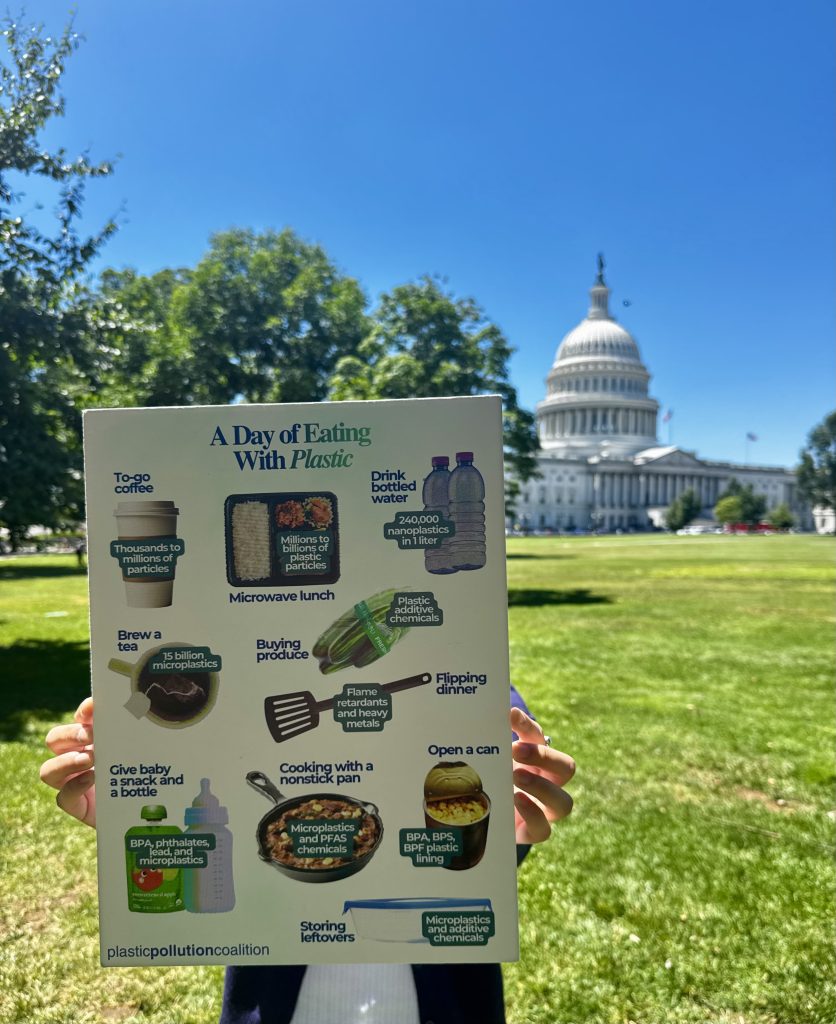
The Microplastics Safety Act would direct the FDA to study the human health impacts of microplastics in food and water and submit findings to Congress within one year. The legislation would assess major exposure pathways and links to cancer, chronic disease, and harms to children’s and reproductive health, while recommending legislative and administrative actions to reduce exposure.
Scientists, health experts, chefs, and the public are increasingly sounding the alarm on microplastics. One poll found that 89% of Americans are concerned about microplastics in food and drinks, while 79% agree that plastic particles pose a threat to human health and warrant action now.
Federal agencies, in response to growing public health concerns, announced plans to further study their impacts on human health. The Microplastics Safety Act would build on this momentum by ensuring sustained federal attention, accountability, and a legislative pathway toward actually reducing exposure through food and water. However, this crisis demands more than research—sufficient scientific evidence exists to show plastics’ harms—and must be paired with immediate policy action to protect health.
Plastic Packaging Fuels Pollution

As if plastic harming human health directly were not bad enough, it’s also wrecking our environment which we depend on to survive. The U.S. Environmental Protection Agency estimates that 14.5 million tons of plastic containers and packaging were produced in 2018, with 69% of that plastic sent directly to landfills. Approximately 95% of plastic food packaging is discarded after a single use.
Without action to curb plastic production, the plastic food packaging market is projected to grow by more than 58% between 2025 and 2035. Without federal action, Americans’ cumulative exposure to harmful chemicals and microplastics will continue to rise. While individual choices can help reduce exposure for ourselves and our loved ones as well as helping shift markets, plastic-free options are often inaccessible or unaffordable for many communities. Keeping toxic chemicals out of the food supply should not be the responsibility of consumers alone.
Take Action
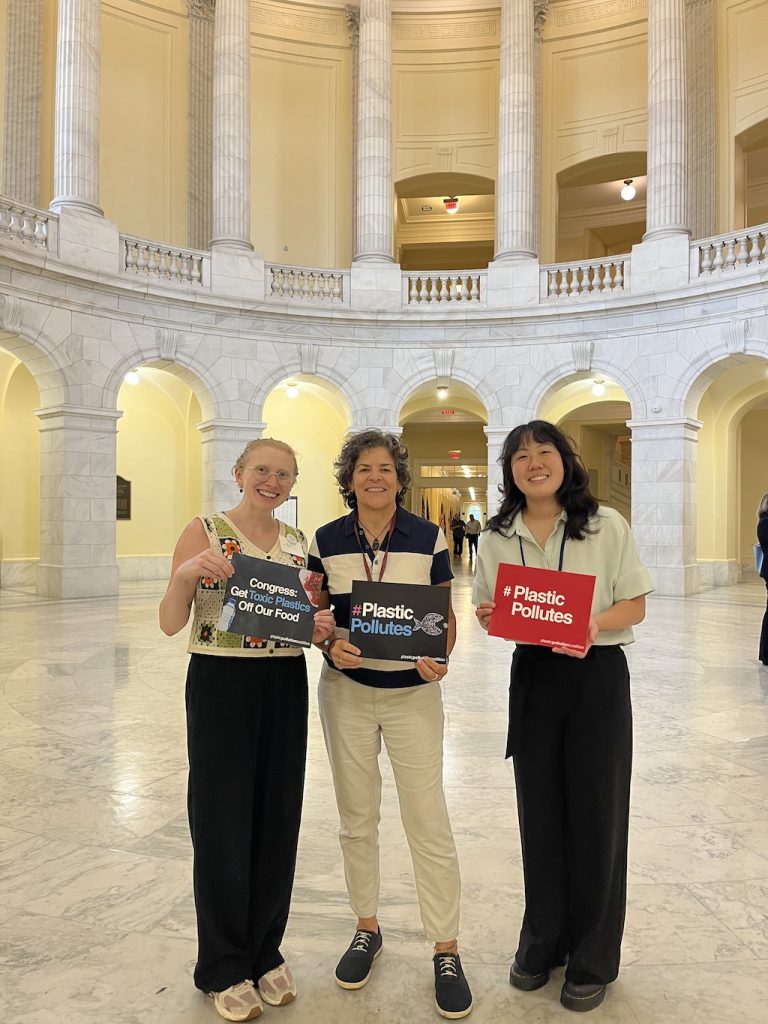
This week, PPC joined the Break Free From Plastic Movement’s lobby week to bring these policy solutions directly to Congress. We met with congressional offices to urge their support in strengthening food safety protections, reducing exposure to harmful chemicals and microplastics, and beginning to repair a regulatory system that has failed to keep pace with science. But we need your help!
Tell your legislators to support policies that get toxic plastics off our food and drinks.


