Microplastics are changing forests, collecting in their air, on leaves, inside plants and animals, and in soils and water sources.
Covering 31% of Earth’s land surface and supporting 80% of land animals, forests are vital to humanity and Earth’s overall health. While plastic pollution’s harm to the oceans and other aquatic ecosystems has been relatively well documented, far less scientific research and notice has been paid to the ways plastic pollution harms forests and other land-based ecosystems. Unfortunately, what we do know shows that forests are a significant repository of plastic pollution, including microplastics. All types of forests— boreal, temperate, and tropical—are affected by plastic pollution.
Forests provide food for over one billion people worldwide. Three-quarters of the planet’s freshwater comes from forested watersheds, supplying water to over half of the world’s major cities. Forests also support climate regulation, livelihoods, medicine, recreation, and storm protection by balancing rainfall patterns and absorbing carbon dioxide from the atmosphere. With forests already under strain from deforestation, habitat loss, and climate change, the burden of plastic pollution cannot be ignored.
Recreation, Runoff, and Weather Can Push Plastic into Forests

Plastic pollutes forests in various ways, including the breakup of discarded plastic items into micro- and nanoplastics. Hiking and recreating in forests may seem like innocent activities, but the reality is that synthetic hiking boots, camping and hiking gear, outdoor clothing, mountain bike tires, and discarded plastic bottles and food packaging pollute and shed plastic particles and chemicals. A study on lakes in New York’s Adirondack Mountains found that samples from one lake with heavier foot traffic contained microplastic levels 23 times higher than those studied from a more remote lake.
Plastics also get into forests through dispersal from the atmosphere or weather, like rain, or runoff from rivers—especially during floods. Illegal dumping remains another key source of pollution in forests and rural areas. A significant amount of plastic pollution—often falsely labeled as “recycling”— is exported from Global North countries, those most responsible for the plastic crisis, to the Global South, home to the majority of tropical forest regions. This plastic is often dumped and sometimes open-burned, the practice representing a form of waste colonialism.
Plastic items and particles accumulate in forest soils, interfering with communities of microorganisms, like bacteria and fungi; insects; nutrient cycling; plant growth and survival; and water availability, cycling, and quality.
Plastic pollution in forests threatens air quality, animals, plants, soils, and water sources—as well as wider Earth systems. For example, an estimated 10% of plastic pollution destined for the oceans originates from waterways in the Amazon, the world’s biggest rainforest.
Plastic Pollutes Amphibians and Other Animals

Forest animals are threatened by small microplastics and larger plastic items alike. Plastic pollution is harmful to wildlife when ingested, and can lead to fatal digestive blockages, starvation, and poisoning from plastic chemicals. Animals often mistake plastic for food, while entanglement in plastic debris can cause injuries and death. Plastic particles also pollute plants, soils, and water, disrupting the ecosystem and contaminating animals’ food sources. For example, in the Amazon, the world’s biggest rainforest, microplastics have been found in the bodies of ants, bats, freshwater and marine fish, monkeys, soils, and turtles. Tropical birds are building nests out of plastic items and fragments. In the Amazon, a manatee died after ingesting a plastic bag.
Amphibians are among the animals most vulnerable to plastic pollution. Frogs, as well as caecilians, newts, salamanders, and toads are extremely sensitive to environmental changes and chemical exposure due to their sensitive, permeable skin. Because they inhabit both land and water, amphibians encounter microplastics in numerous ways: absorbing plastic particles and chemicals through their skin, which can damage their body tissues and cells; by consuming contaminated prey, and ingesting particles directly. Microplastics and plastic chemicals can also be transferred up the food chain to amphibians’ predators, like snakes.
In one review, more than 80% of amphibians studied had microplastics in their bodies. Scientists warn that microplastics can increase disease susceptibility, block digestive tracts, introduce toxic chemicals, reduce nutrient absorption, and hinder reproduction, all of which contribute to their global decline. Another study showed that microplastics in wood frogs’ leg muscles, gastrointestinal tracts, and skin can delay frog development. Research on tadpoles has also shown microplastics are linked to declines in body condition, growth, feeding behaviors, as well as organ malformations.As amphibians disappear, the forests lose some of their most important indicators of environmental health. Protecting wildlife—including amphibians—from plastic pollution is essential to safeguarding the health and resilience of our forests.
Trees Harmed by Plastic Pollution
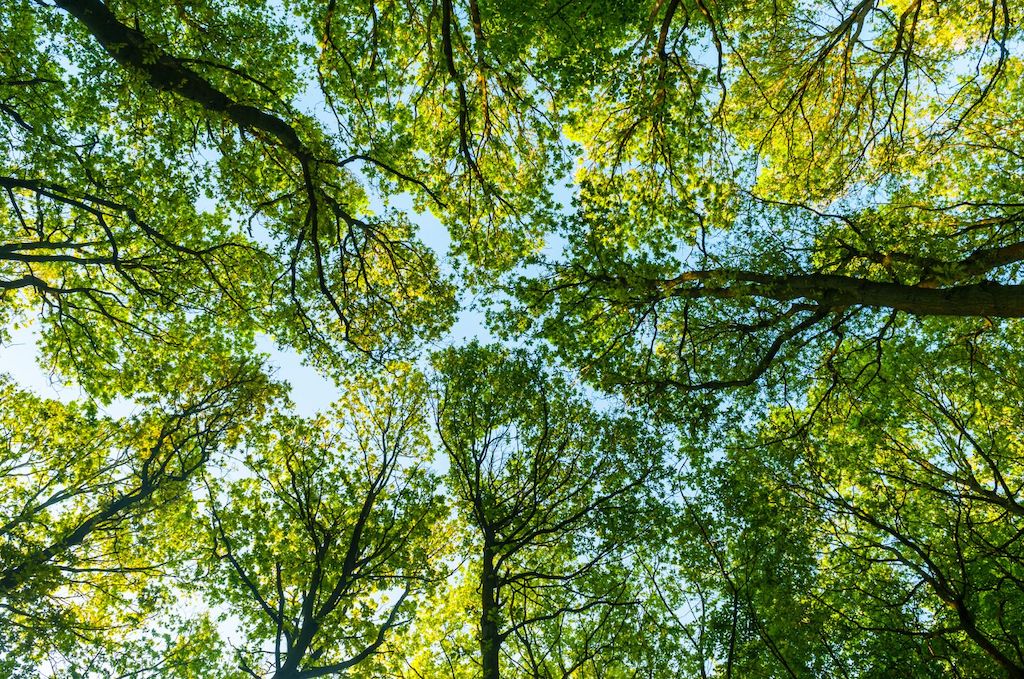
Scientists are also now working to better understand how plastic pollution affects trees in forest ecosystems and protect trees from plastics’ harm. Microplastics have already been detected in the roots of beech trees, birch, and spruce trees. Consequently, plastic particles can migrate from roots into tree tissues, potentially reducing their uptake of nutrients and harming tree health.
Trees and their leaves are also key indicators of air pollution, and studies show that airborne microplastic pollution in forests accumulates on leaf surfaces before falling to the forest floor. This plastic buildup may even hinder the ability of forests to mitigate global climate change, as studies show that plastic particles can disrupt photosynthesis, the process by which plants absorb carbon dioxide. Climate models assume that plant life and forests will continue to fulfill their vital role as one of Earth’s carbon sinks at a consistent rate, but if this process weakens, slowing global warming could become even more challenging.
Forests Need Our Help

Real solutions exist today to end the plastic pollution crisis, from enacting just policies and improving business practices to shifting culture toward true environmental stewardship. Below are some steps you can take to help.
- Preventing plastics from polluting and harming the world’s forests and wildlife starts with one essential step: governments must require corporations to stop producing so much plastic. Sign the petition to tell world leaders to adopt a strong plastics treaty that curbs plastic pollution from the source.
- In the U.S., legislation like the Reducing Waste in National Parks Act would direct the National Park Service to phase out single-use plastics like foodware, bottles, and bags, protecting treasured landscapes, many key forested areas, from plastic pollution. Urge your state representatives to support such commonsense regulations. Find your reps’ contact information here.
- As an individual and protector of forests, when you hike or spend time in forests, opt for clothing made from natural fibers like cotton or wool, bring plastic-free reusable foodware and water bottles, and be sure to leave no trace behind.
Our forests, and the countless species that call them home, depend on bold action. Learn more about the problem with plastic and what you can do to help create a healthier future for frogs and other forest life.