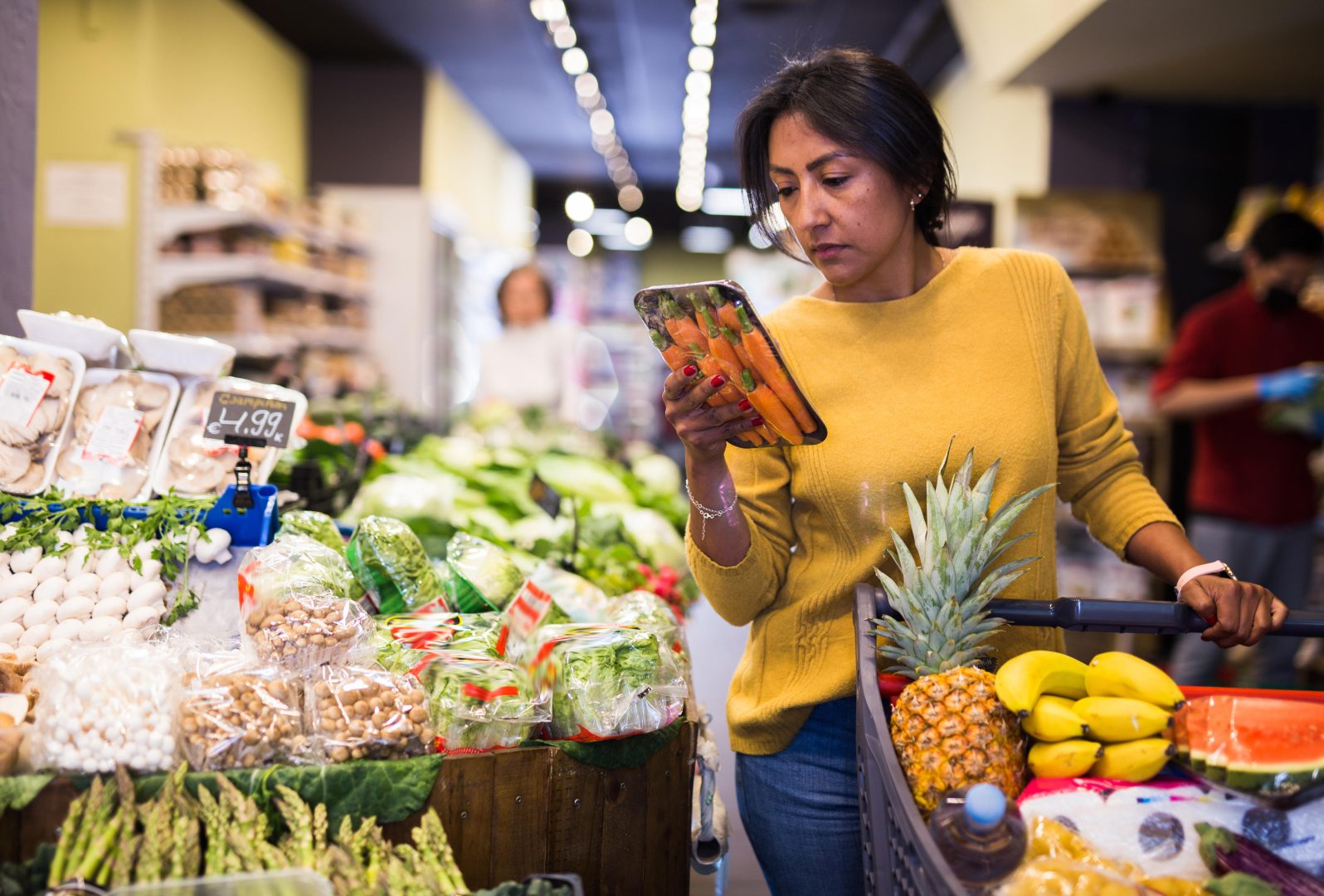
Major trade groups representing dairy product makers, farmers, grocers, packaging manufacturers, and restaurants are suing the State of California over its landmark “Truth in Labeling” Law (SB 343). California’s Truth in Labeling Law aims to protect consumers from false recyclability labels, particularly on plastic products that are rarely recycled. The plaintiffs seek to block enforcement of the law, arguing it acts as government-imposed censorship that stops product makers from informing consumers when packaging is recyclable unless the product material satisfies “rigid” and “arbitrary” regulatory criteria established by the state.
Many shoppers do not realize that the “chasing arrows” symbol one might equate with “recyclable” may appear on products that are not actually recyclable. Passed in 2021, SB 343 requires companies to meet specific recyclability criteria—that products are verifiably recycled in most communities across California—before clearly labeling products as recyclable.
“Trade groups are attempting to undermine progress made in keeping consumers informed by asserting that truth in labeling ‘violates free speech.’ Consumers demand to know what happens to plastic after use. Companies asserting their ‘right’ to deceive consumers need to realize that deception is bad for business. Implementing SB 343 is a critical step toward reducing plastic pollution in California and beyond.”
— Julia Cohen, Co-Founder and Executive Director, Plastic Pollution Coalition
Why This Law Matters
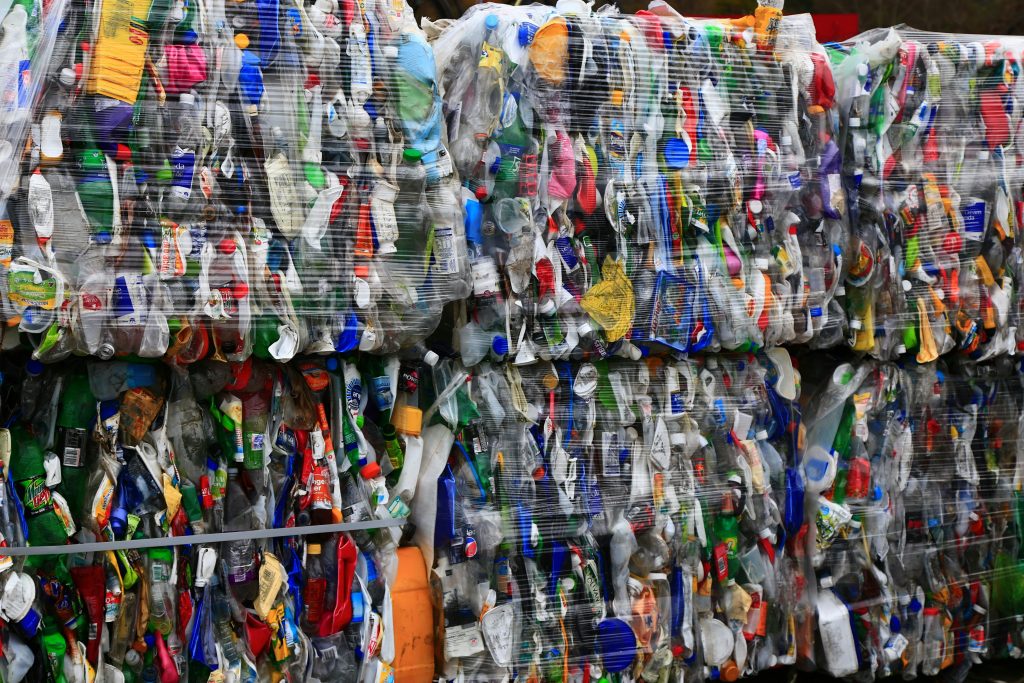
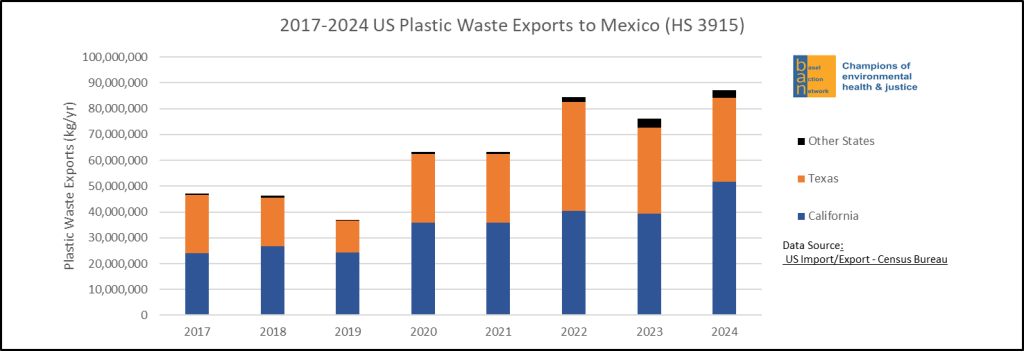
As a first-of-its-kind law, SB 343 debunks decades of false advertising and messaging from plastics and fossil fuel producers (and often parroted by governments) that plastic recycling is a solution to plastic pollution. In reality, plastic was never designed to be recycled. More than 91% of all plastic ever made has not been recycled. Instead, plastic is most often sent to landfills, incinerated, shipped overseas—mostly to developing nations and the Global South—to be dumped or open-burned, and sent into Earth’s air, soils, and waters. In 2024, California sent almost 22,050 tons of plastic waste to developing and Global South countries and more than 56,200 tons of plastic waste specifically to Mexico, according to the Basel Action Network.
Reportedly, less than 10% of single-use plastics are recycled in the State of California. But even this is a misrepresentation of the reality of plastics recycling: plastics’ quality diminishes with each round of recycling, and so “recycled” plastic requires significant amounts of newly manufactured (virgin) plastic and additive chemicals to maintain its useful qualities. Recycling plastic requires significant inputs of energy and water, produces microplastics and nanoplastics, and recycling plastic also makes plastic more toxic.
In their complaint, industry groups claim that SB 343 could increase landfill waste. But in practice, clear and honest labeling reduces confusion, drops costs for consumers paying for curbside waste services for unrecyclable items, and helps minimize plastic pollution by requiring companies to adhere to accurate product labeling.
SB 343 is set to take effect in October 2026, giving companies some time to comply. Once implemented, local jurisdictions and the California Attorney General will be able to enforce penalties on companies that mislabel their products, marking significant progress toward greater transparency and accountability. This legal battle is not the first challenge to SB 343. Plastic Pollution Coalition, alongside more than 150 supporting advocates, successfully helped stop AB 473, a bill that would have gutted SB 343. With continued advocacy, these laws can withstand pushback.
Take Action
At a time when plastic pollution and its impacts on human health are accelerating, laws like SB 343 are essential in reducing harm. But more transparency alone is not enough. Rules that prevent plastic pollution must be coupled with a drastic reduction in plastic production to address the crisis at its source. Consumers deserve honest information and a system that no longer relies on misleading claims to sustain the status quo.
One way you can take action to reduce plastic production and use today is to tell your legislator to get toxic plastic off of our foods and drinks. American food and beverage systems have become inundated with plastic packaging. Plastic fast food containers, plastic water bottles, plastic utensils, and even individually plastic-wrapped produce have become the norm. But you can help change this by calling for plastic-free, reusable and regenerative packaging (and when possible, no packaging at all).